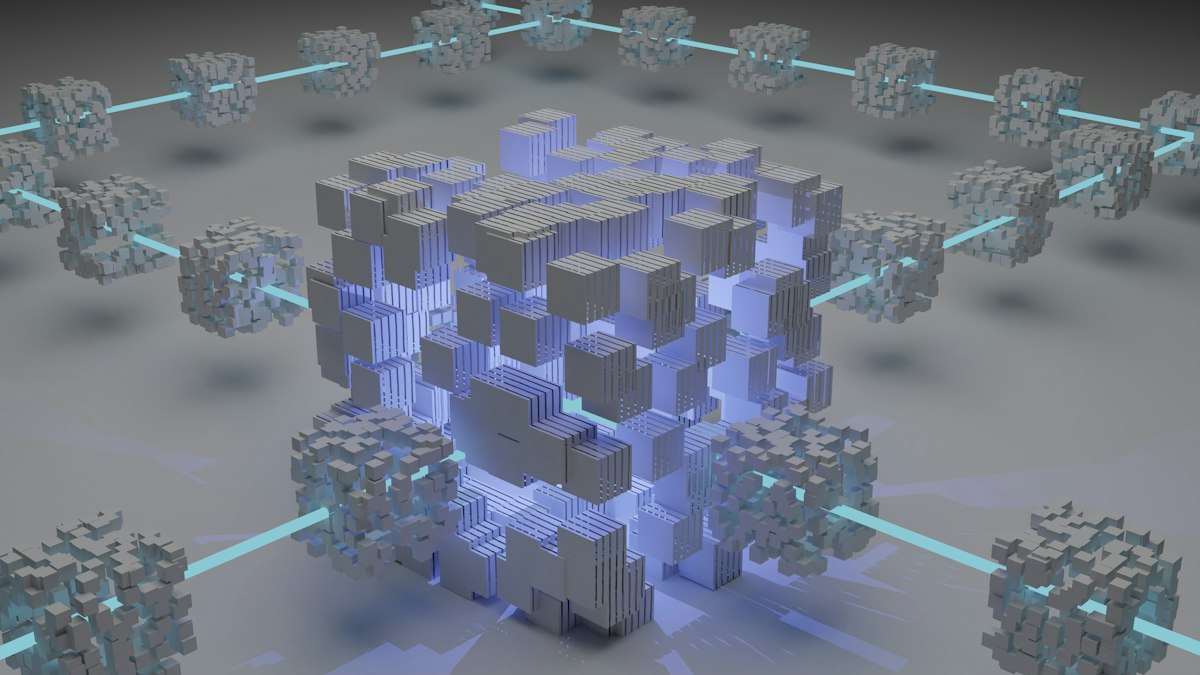

Imagine sharing your unused Wi-Fi bandwidth, hard drive space, or GPU power with people around the world — and getting paid in cryptocurrency for it. That's the core idea behind DePIN, or Decentralized Physical Infrastructure Networks.
DePIN has emerged as one of the hottest trends in crypto in 2025–2026, with a combined market cap exceeding $30 billion and dozens of new projects launching every quarter. This guide explains everything you need to know about DePIN — from fundamentals to investment considerations.
What is DePIN?
DePIN stands for Decentralized Physical Infrastructure Networks. It refers to networks where blockchain token incentives coordinate real-world hardware deployment by ordinary people, rather than relying on a single company to build and own all the infrastructure.
The term was coined by Messari Research in 2022 and quickly gained traction because DePIN represents something rare in crypto: genuine real-world utility. Instead of just trading tokens, participants are building actual services — wireless networks, storage systems, GPU clusters — that people pay to use.
Simple example: instead of paying Amazon Web Services for cloud storage, you rent space from thousands of hard drives owned by individuals around the world via Filecoin. Each storage provider earns FIL tokens. The result is cheaper storage, no central point of failure, and no single company controlling your data.
How DePIN Works
DePIN networks operate through three interconnected layers:
1. Physical Hardware Layer
Providers contribute real hardware to the network. This might mean installing a Helium hotspot for LoRaWAN coverage, connecting a GPU to Render Network, or sharing hard drive space on Filecoin. The hardware must be online and providing genuine service.
2. Blockchain Incentive Layer
Smart contracts on-chain automatically track each device's contribution and distribute token rewards proportionally. There's no human intermediary deciding who gets paid — the protocol enforces fairness transparently.
3. Service Consumer Layer
End users pay tokens to access the network's resources — paying RNDR to render 3D scenes, FIL to store files, or AKT to deploy cloud workloads. Demand from consumers creates buy pressure that sustains token value for providers.
The DePIN flywheel: more providers → lower cost → more users → higher demand → better token value → more providers join.
Top DePIN Projects
Here are the leading DePIN projects by adoption and market cap in 2026:
Helium Network (HNT)
The world's largest decentralized wireless network, with over 900,000 hotspots globally. Supports both LoRaWAN for IoT devices and 5G cellular (via the MOBILE token). Migrated to Solana in 2023 for better scalability. Used by logistics, agriculture, and smart city applications.
Filecoin (FIL)
The largest decentralized cloud storage network, with over 20 exabytes of raw capacity. Can be 5–10x cheaper than AWS S3 for cold storage. Widely used in Web3 for storing NFT metadata, dApp data, and archival content.
Render Network (RNDR)
Connects idle GPU owners with studios and artists needing rendering power for film, VFX, AI training, and 3D content. Migrated to Solana and is benefiting directly from the ongoing AI compute boom.
Hivemapper (HONEY)
Mount a specialized dashcam in your car, drive your normal routes, and the system maps roads while paying you HONEY tokens. Goal: a decentralized alternative to Google Maps that updates faster. Coverage in 100+ countries.
Akash Network (AKT)
A "decentralized AWS" offering cloud compute at up to 80% less than major cloud providers. Supports Kubernetes workloads, AI inference, and web hosting. Increasingly popular for AI startups seeking affordable GPU access.
Grass (GRASS)
Share unused internet bandwidth via a browser extension and earn GRASS tokens. Used for web scraping and AI data collection. The lowest barrier to entry in DePIN — no hardware purchase required.
DePIN vs Traditional Cloud Computing
How does DePIN stack up against centralized infrastructure?
Cost: DePIN is typically 40–80% cheaper because providers worldwide compete on price, and there's no massive data center overhead to recoup.
Decentralization: Traditional cloud has single points of failure — when AWS goes down, half the internet slows. DePIN distributes hardware globally, making it far more resilient.
Privacy: No central company can inspect, censor, or sell your data. Cryptographic proofs ensure providers can't read what they store.
Reliability: Still DePIN's weakness — SLAs are not as strong as AWS or Google Cloud. Finding reliable, high-uptime providers at scale remains a challenge.
Ease of use: Much steeper learning curve for non-crypto users. Wallets, gas fees, and token management add friction compared to a credit card and a login.
How to Participate in DePIN
There are two main ways to get involved with DePIN:
Option 1: Become a Provider (earn tokens by contributing hardware)
- Grass: Easiest — install a browser extension, share idle bandwidth, earn tokens automatically.
- Helium: Buy a hotspot (~$500), place it in a well-covered location, earn HNT daily.
- Render: Have an NVIDIA GPU? Connect it to Render Network and earn RNDR when it's idle.
- Filecoin: Have spare hard drives? Run a Lotus storage node and earn FIL (requires technical skill).
Option 2: Invest in DePIN tokens
Buy tokens like HNT, FIL, RNDR, or AKT on exchanges like Binance or Coinbase as a bet on the sector's growth. This requires no hardware but carries full token price risk.
Key considerations before starting as a provider:
- Calculate hardware payback period before purchasing.
- Factor in electricity costs — some hardware runs 24/7.
- Check network coverage maps — underserved locations often earn more.
- Rewards are paid in tokens, not fiat — price volatility affects real profitability.
Risks of DePIN
Token Inflation: DePIN protocols mint new tokens as rewards. If demand doesn't grow fast enough, inflation dilutes token value, making it possible to receive many tokens but still lose money in USD terms.
Hardware Obsolescence: Hardware used in DePIN can become outdated quickly. A newer hotspot model or GPU generation may earn significantly higher rewards, leaving older hardware uncompetitive.
Big Tech Competition: If AWS, Google, or Microsoft aggressively cut prices, DePIN's cost advantage shrinks. Enterprise clients tend to prioritize reliability over decentralization.
Regulatory Risk: In some jurisdictions, operating wireless networks or data centers without a license may be illegal. Always check local regulations before deploying hardware.
Quality of Service: It remains difficult to guarantee consistent uptime and performance at enterprise scale when relying on distributed, consumer-grade hardware.
Future of DePIN
AI + DePIN Convergence: The insatiable demand for GPU compute for AI training is a direct tailwind for Render Network and Akash. As AI scales, decentralized compute becomes increasingly attractive for cost-sensitive startups and researchers.
Mobile DePIN: New projects are turning smartphones into DePIN nodes — leveraging GPS, cameras, and sensors already in everyone's pocket. This could bring billions of devices into the ecosystem.
Energy DePIN: Peer-to-peer energy trading networks are emerging, linking renewable energy producers directly with consumers and enabling tokenized carbon credits and grid balancing.
DePIN + RWA: Combining DePIN with Real World Assets (RWA) could allow tokenized infrastructure assets — fiber cables, cell towers, data centers — to be traded on-chain like ETFs, opening infrastructure investing to retail participants.
Messari estimates DePIN could reach a $3.5 trillion market cap by 2028 if adoption continues at current rates, potentially making it one of the largest sectors in all of crypto.